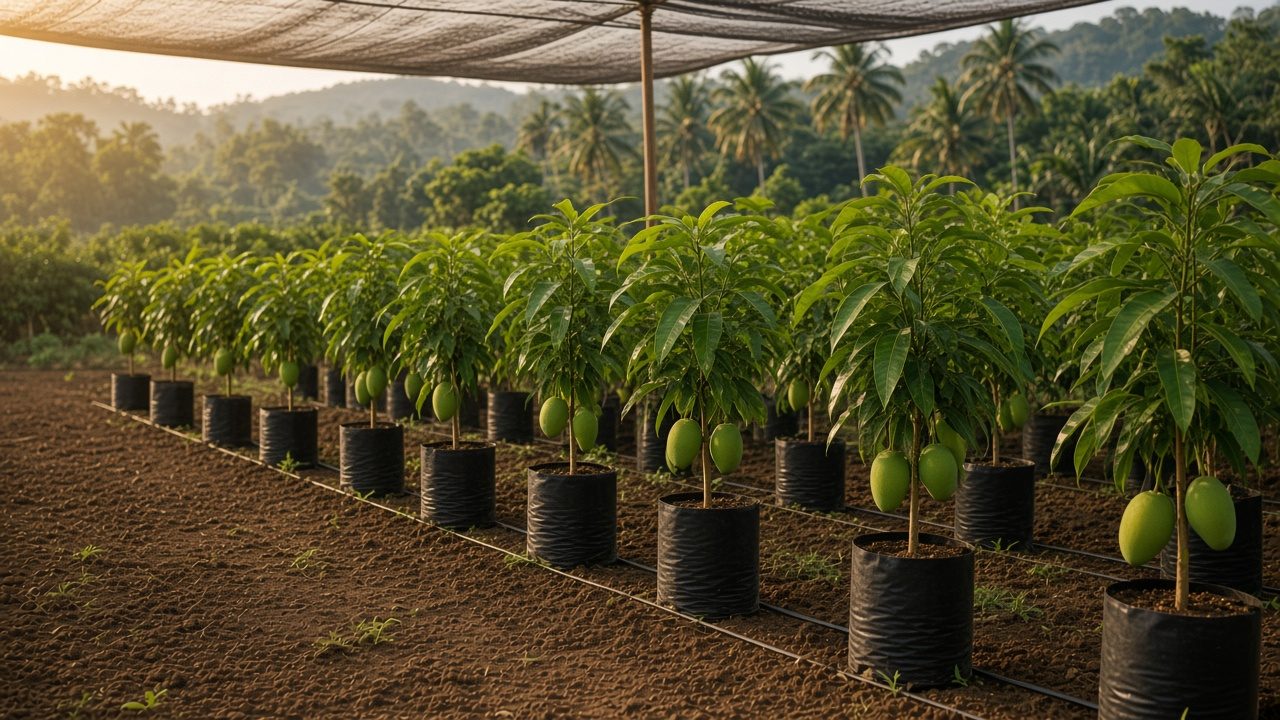
Crops
Buy clean, uniform planting material — not the cheapest seedling
Untested seedlings scatter in the field. Clones, grafts, or disease-indexed stock cost more at the gate and less over a decade.
Buy clean, uniform planting material — not the cheapest seedling
A mixed bag of unnamed seedlings will not become a uniform orchard. Some will dwarf, some will race, some will carry disease you cannot see at purchase.
What to ask for
- Is this a clone, a graft, tissue-culture stock, or a selected line — or just a seedling from unknown fruit?
- Can the nursery name the cultivar and the rootstock?
- Has the lot been checked for the diseases that already limit this crop in your district?
Prefer known, uniform material when it exists. Cheap unknown stock is a common way to plant a future cull. Isolate new deliveries if you can, and do not mix lots in one row without labels.
Write source, form (seedling, graft, clone), and date on the tree type the day the plants arrive. The record is what lets you trace a failure later.
In this series
- Trial a small block before you fill the orchard
- Buy clean, uniform planting material — not the cheapest seedling
- Choose for the disease you already have, not the bunch you hope for
- Kilograms are not the crop if the buyer will not take them
- Compact trees are a labour tool, not a fashion
- Match the plant to the soil, the water, and the actual buyer