Soil
Compost feeds life, not just NPK numbers
Finished compost is food and habitat for soil organisms. Treat it as a living amendment, not a weak copy of a fertilizer label.
Compost feeds life, not just NPK numbers
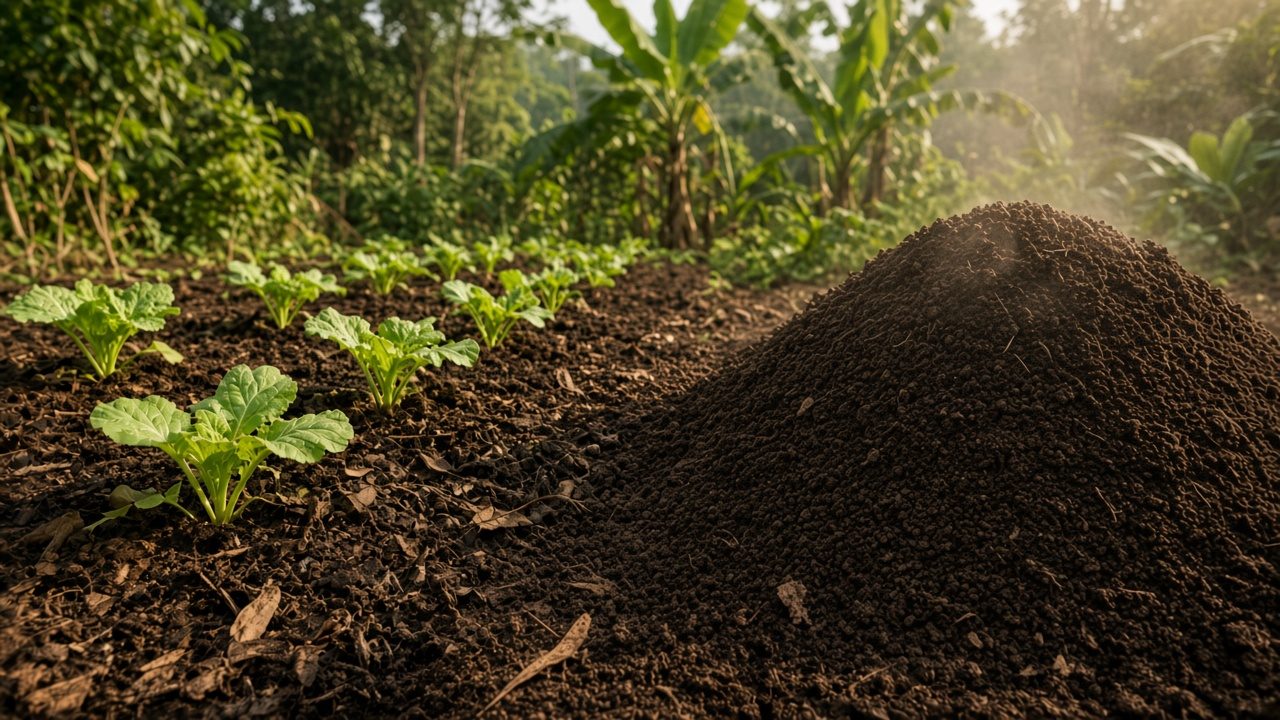
A compost heap that finished well carries organic matter and a crowd of organisms. Spread as a thin living layer, it feeds the web that cycles nutrients and helps crumbs hold water and air.
It is not a precise fertilizer. Nutrient content varies. Heat in a pile also kills many root fungi, so compost does not replace a mycorrhizal partner at planting.
Keep heaps aerobic and finish them before they go on a bed. If a bed still dusty after compost, you may need more cover and less tillage — not a stronger soluble blend on top.
In this series
- Treat soil as a living web, not an inert bag of fertilizer
- Roots feed microbes; microbes then feed roots
- Compost feeds life, not just NPK numbers
- Keep soil covered so organisms can work
- Heavy tillage breaks fungi, worms, and structure
- Trees like a more fungal system; annuals like faster bacterial cycling