Soil
Host crops keep fungi; long brassica or fallow sequences starve them
Cabbage-family beds and empty fallows do not feed arbuscular fungi. Follow them with a host cover before a crop that needs the partnership.
Host crops keep fungi; long brassica or fallow sequences starve them
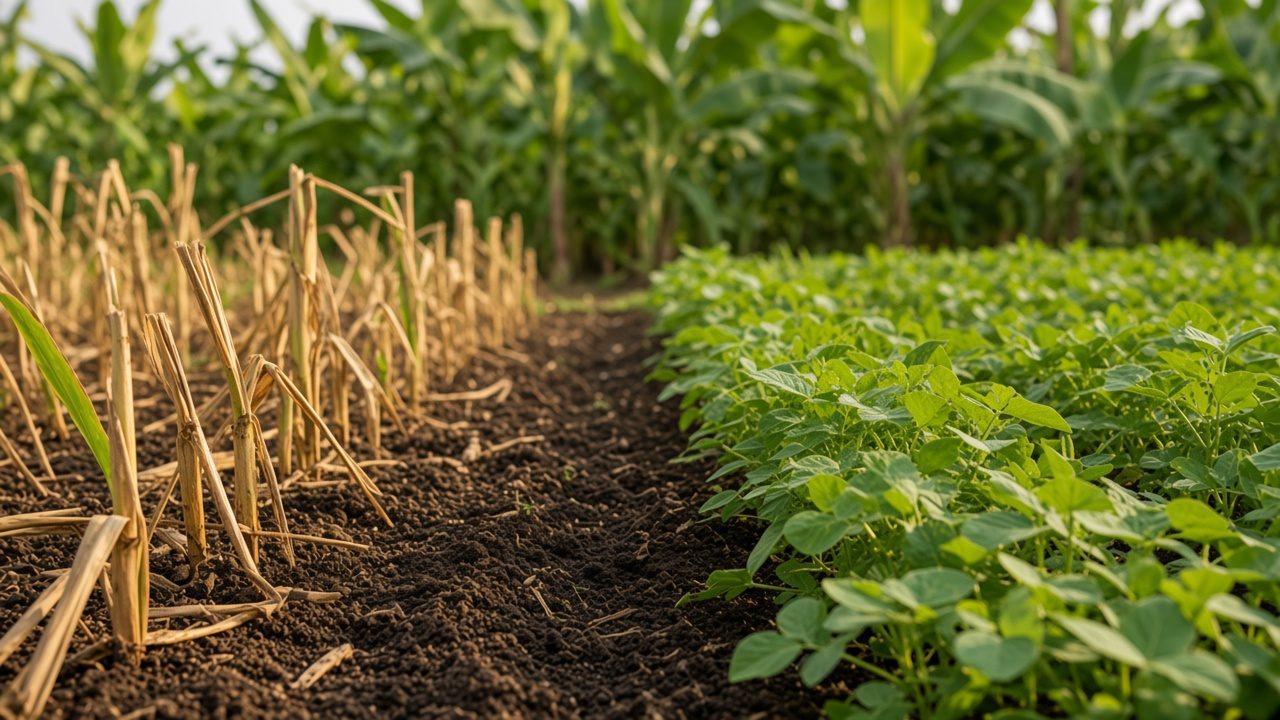
Many vegetables, grasses, and fruit plants host arbuscular fungi. Several cabbage-family crops, beets, spinach, and mustards generally do not. A long stretch of those non-hosts, or a bare fallow, can drop the living network before you plant a crop that needs it.
You can still grow cabbage. Plan the next step: a host cover or a strongly mycorrhizal cash crop after the non-host season, so the fungi have roots again.
Do not treat this as a banned-crop list. It is a rotation order. If the following tomato or onion row struggles after a long brassica block, missing fungal partners are one place to look — along with soil, water, and seed.
In this series
- Fungi need living roots, air, and moisture — a bag is not a soil
- Put inoculant next to the seed or the transplant root
- Too much phosphorus can turn the partnership off
- Host crops keep fungi; long brassica or fallow sequences starve them
- Tillage, compaction, and waterlogging break the network
- Match the fungus type to the plant — vegetables are not pines