Soil
Roots feed microbes; microbes then feed roots
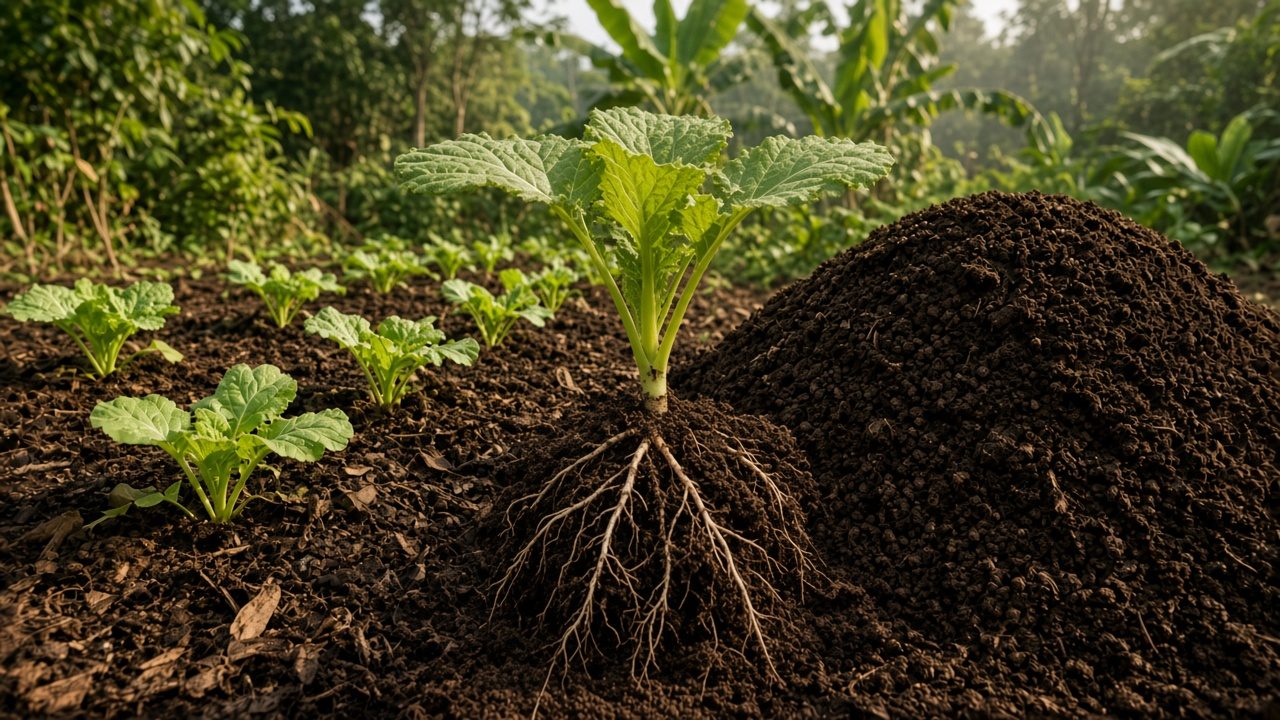
The thin zone around a living root is where plants pay sugars and get nutrients back. Bare, salty, or compacted root zones stall that trade.
Roots feed microbes; microbes then feed roots
Leaves make sugars. Roots leak some of that carbon next to the root. Bacteria and fungi gather there, hold nutrients in their bodies, and smaller organisms that eat them release plant-available leftovers next to the root — not halfway down the profile.
Practices that kill the root zone — hard pans, drowning, harsh salts, long bare soil — stop the payment. The plant then looks hungry even if a bag was spread on the surface.
Keep something living in the bed when you can. Mulch and compost support the same neighbourhood.
If transplants stall in sterile mix, missing that neighbourhood is one cause among water and shade.
In this series
- Treat soil as a living web, not an inert bag of fertilizer
- Roots feed microbes; microbes then feed roots
- Compost feeds life, not just NPK numbers
- Keep soil covered so organisms can work
- Heavy tillage breaks fungi, worms, and structure
- Trees like a more fungal system; annuals like faster bacterial cycling