Livestock
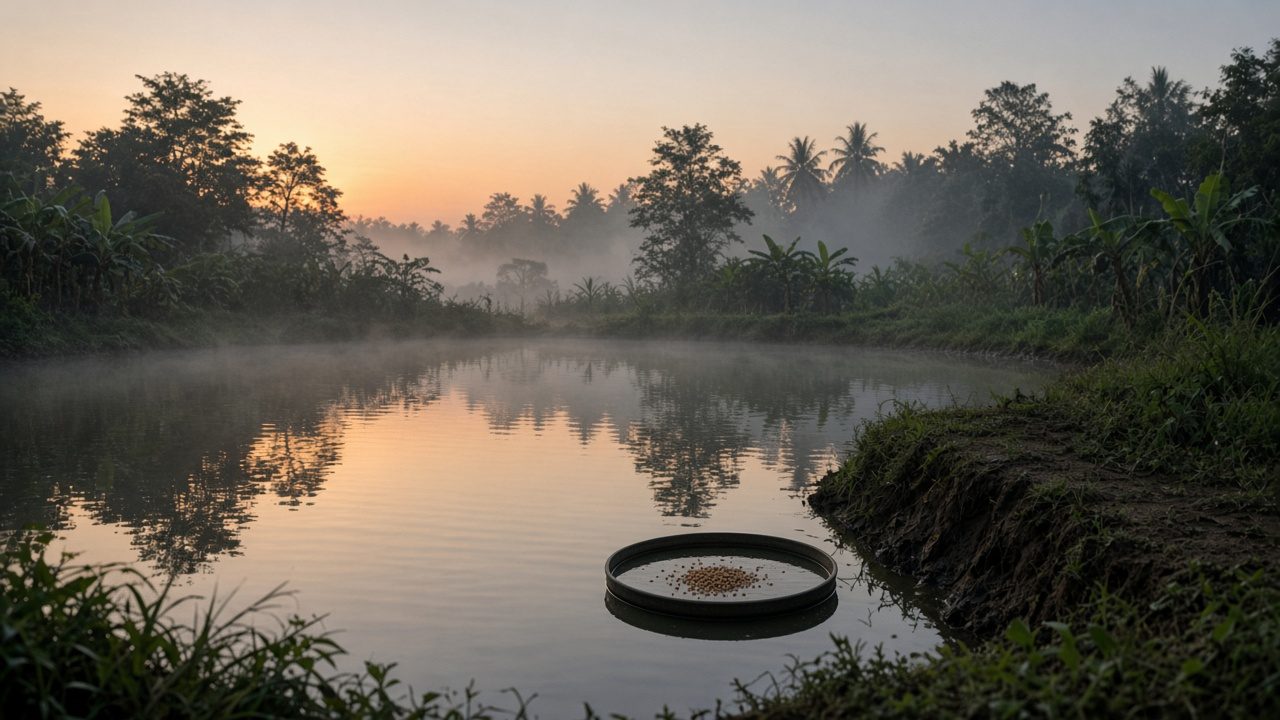
Feed for conversion, not for leftover pellets
More bags do not mean more saleable fish. Excess feed pollutes water, raises oxygen demand, and wastes money.
Feed for conversion, not for leftover pellets
Fish turn feed into growth only when water, oxygen, and appetite allow it. Pellets that sink and sit become ammonia and a disease pressure. The useful number is how much feed made how much saleable fish — not how many bags left the store.
Buying and storing
Keep feed dry, off the floor, away from fuel, fertilizer, and medicines. Use the earliest-expiring stock first. Reject mouldy, rancid, wet, or unlabelled bags. A low bag price is expensive if conversion is poor or the lot is spoiled. Segregate any medicated feed so it cannot mix with the daily ration.
At the water
Confirm the right feed and lot. Smell it. Watch whether fish rise evenly and finish what you offered. Stop before leftovers accumulate. If appetite drops, check water and equipment before you reach for a treatment.
Record quantity and response on the existing feeding action. Compare batches and units over time.
Do not leave bags in sun or rain. Do not feed on autopilot when the fish are already hanging at the surface.
In this series
- Water before feed — watch the pond first
- Stock what the water can carry; buy healthy seed
- Feed for conversion, not for leftover pellets
- Prevent disease with water, space, and calm handling
- Harvest gently, then ice without delay
- A batch without records is a business risk