Livestock
Inspect with a purpose, then close the hive
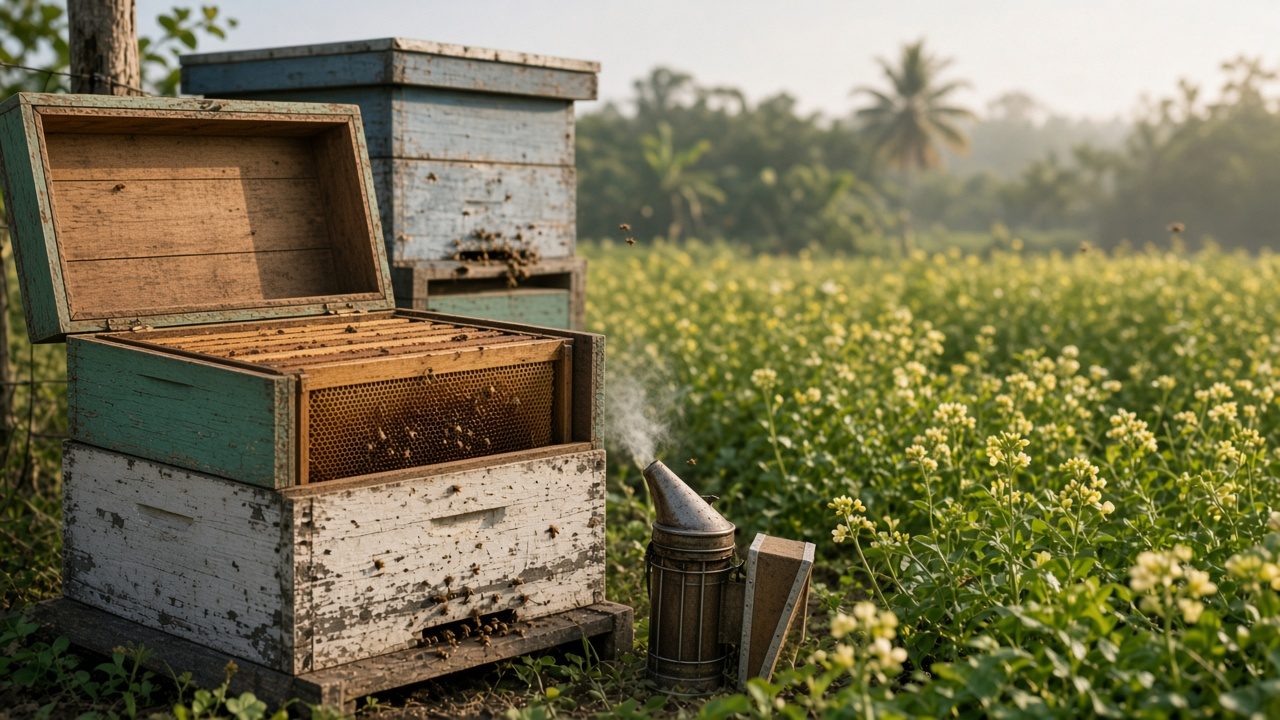
Open a hive only to answer a question: queen, brood, stores, space, or pests. Write what you saw the same day.
Inspect with a purpose, then close the hive
Casual opening chills brood, spreads pests, and teaches you little. Decide what you need to know before you light the smoker.
Questions worth opening for
- Is the queen laying? Look for eggs or a compact brood pattern, not a hunt that destroys the nest.
- Are stores enough for the next dearth or flow?
- Is the brood nest crowded enough to swarm?
- Do you see beetles, moths, or patchy dead brood?
Smoke gently. Work one colony at a time. Put frames back in order.
Record on the hive inspection
Use the existing hive inspection: queen status, brood healthy, honey/pollen/brood frames, swarm or queen cells, pests, notes. That line is part of management. A memory of “looked fine” will not help the next visit or the next keeper.
In swarm season, inspect often enough to catch cells. In winter, look from the outside unless stores or weather force a short check.
This is not a disease laboratory. Odd brood, smell, or collapse is a reason to close up and get local veterinary or extension advice.
In this series
- Start with two colonies, not one
- Work the year the colony actually lives
- Inspect with a purpose, then close the hive
- Give space, or the colony will take it as a swarm
- Keep colonies strong; do not wait for a rescue bottle
- Harvest surplus honey; count pollination as yield too