Livestock
Start with two colonies, not one
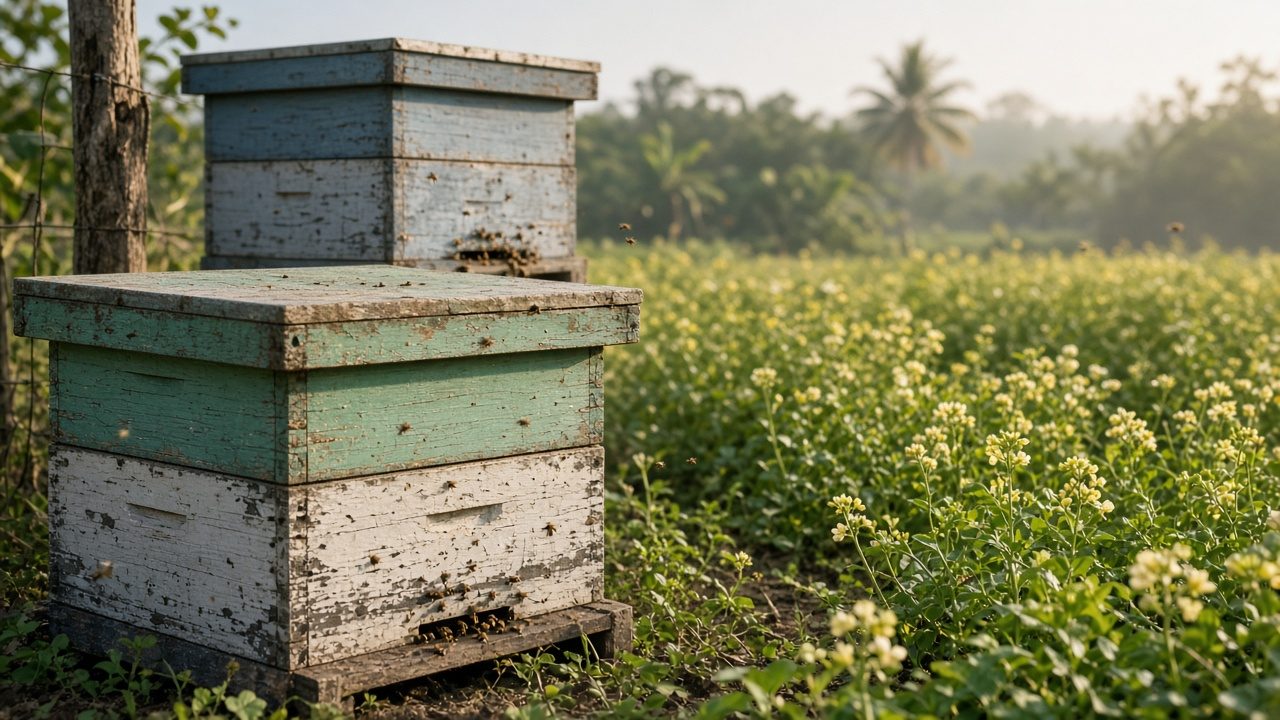
Two matching hives let you compare and still have bees if one fails. Year one is establishment, not a honey plan.
Start with two colonies, not one
A single hive teaches you slowly and leaves you with nothing if that colony dies. Two matching colonies let you compare brood, stores, and temperament on the same forage, and you can combine or share frames if one is weak.
Before bees arrive
- Use one standard hive pattern (Langstroth-style or the local equivalent) so lids, frames, and supers interchange.
- Buy packages, nucs, or splits from a source other beekeepers in your climate already trust. Cheapest unknown stock is a common first-year loss.
- Place hives where they get morning sun, a wind break, and are not against a neighbour’s door or a worker path.
- Put drinking water within a short walk. Bees will otherwise visit laundry, troughs, and taps.
- Open a flock record the same day: hive ID, queen year if known, source, and map pin. Year one, expect little or no surplus honey. The job is a laying queen, enough bees to cover brood, and stores for the first dearth.
In this series
- Start with two colonies, not one
- Work the year the colony actually lives
- Inspect with a purpose, then close the hive
- Give space, or the colony will take it as a swarm
- Keep colonies strong; do not wait for a rescue bottle
- Harvest surplus honey; count pollination as yield too