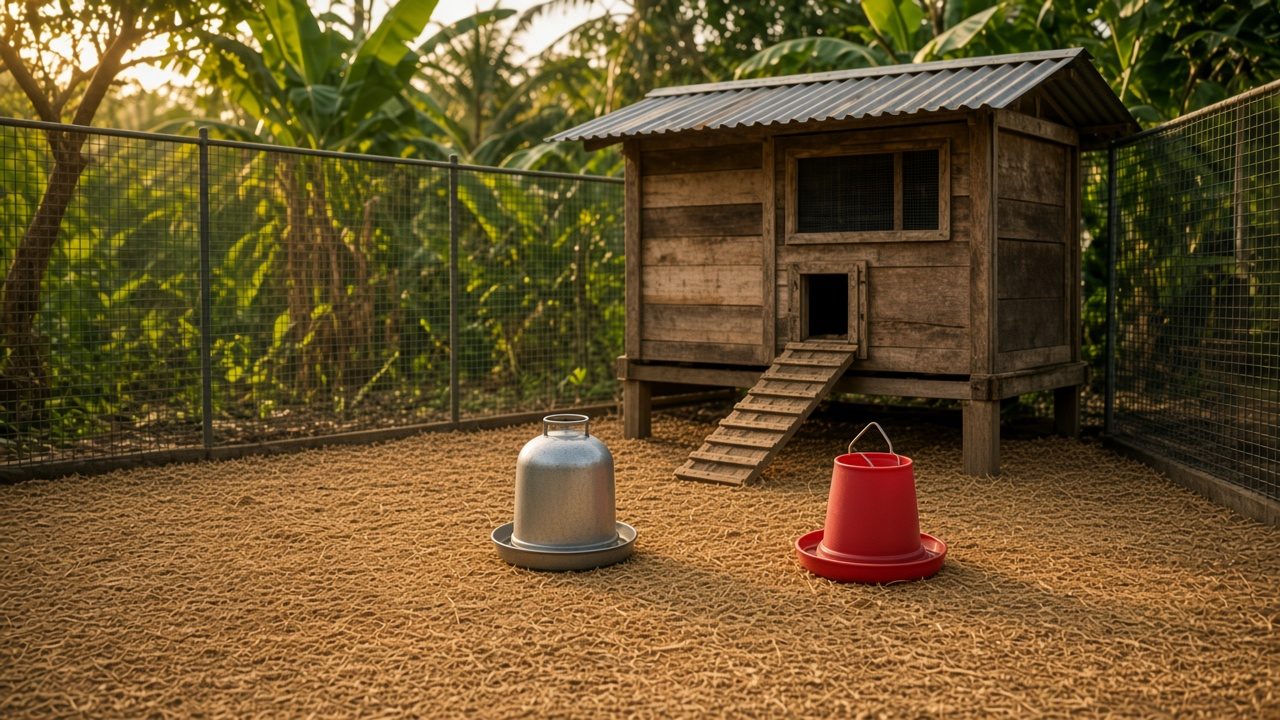
- 01 Prepare the yard: coop, nests, predators, and weather Lock down housing, nest space, predator proofing, and weather cover before chicks or pullets arrive.
- 02 Pick a purpose: layers, broilers, or dual-purpose birds Match breed and batch plan to eggs, meat, or mixed backyard flocks — including indigenous strains.
- 03 Brooder basics: heat, water, and the first 21 days Keep chicks warm, dry, and drinking. Brooding is a thermal-care stage, not a miniature adult coop.
- 04 Chicken clocks: pullet grow-out vs broiler harvest Use the layer clock (pullet then lay) or the broiler clock (grow, fatten, harvest). Do not mix them.
- 05 The daily flock walk: dead, culls, feed, and eggs One short walk each day beats a weekly catch-up. Log what you see the same day.
- 06 Collect eggs: grade, dirt, and storage Collect often, keep dirty and cracked eggs out of the sale pile, and store clean eggs cool and dry.
- 07 Light and nest boxes for laying flocks Stable day length and clean, dark nests keep lay going. Sudden dark or crowded nests cut production.
- 08 Adding birds, pecking order, and roosters Introduce new birds slowly, watch bullying, and keep rooster numbers matched to the hen group.
- 09 When hens stop laying: molt, spent, and next steps A pause in lay can be molt, short days, or a spent flock. Decide with records, not a bottle.
- 10 Biosecurity and when to call a vet Keep visitors, wild birds, and shared tools from walking disease in. Call a vet for sudden deaths or many sick birds.